Why Employee Retention Deserves Your Attention
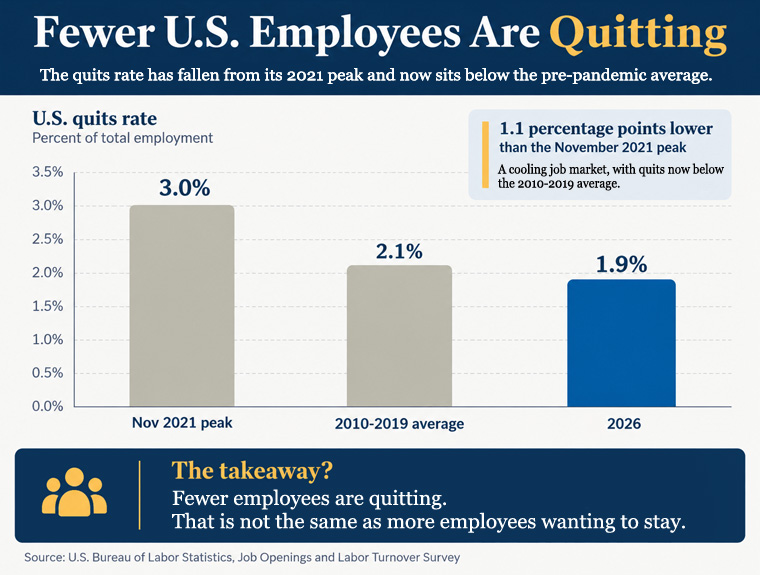
Employee retention is one of the most consequential challenges facing organizations today. Replacing an employee typically costs 50% to 200% of their annual salary - and that estimate doesn't capture the lost institutional knowledge, the productivity dip while a replacement gets up to speed, or the impact on team morale when good people leave.
The good news is that most of the factors driving turnover are within your control. SHRM research shows that nearly 80% of employees who left their jobs cited lack of appreciation and recognition as a leading factor. That means a significant portion of your turnover problem has a solution that doesn't require a budget overhaul, it requires consistent, deliberate attention to how employees are treated. Article Updated March 2026
Here are ten strategies that work:
1. Start with better hiring
Retention problems often begin before an employee's first day. Hiring candidates who are genuinely aligned with your culture and values — not just technically qualified — dramatically improves the odds that they will stay. A thorough screening process that evaluates both skills and cultural fit reduces early turnover and protects your investment in onboarding.
2. Build a strong onboarding program
Most employees decide within the first 90 days whether they will stay long-term. A structured onboarding program that introduces new hires to your culture, goals, and team from day one significantly reduces early turnover. Research suggests that effective onboarding can improve retention rates by as much as 25%. Recognizing employees at the completion of onboarding, with a meaningful welcome gift - reinforces that they made the right choice. See onboarding recognition
3. Offer flexibility where you can
Workplace flexibility, in scheduling, location, or how work gets done, has become a significant factor in employees' decisions to stay or leave. Organizations that offer some degree of flexibility consistently outperform those that don't on retention metrics. This doesn't require a complete remote work policy - even modest accommodations signal that the organization trusts its employees.
4. Make recognition a regular practice
Recognition is one of the highest-impact, most cost-effective retention tools available. Employees who feel consistently valued are far more likely to stay. A comprehensive recognition strategy covers multiple touchpoints, service milestone awards, on-the-spot recognition, holiday appreciation gifts, and peer recognition. Each reinforces the message that the organization notices and values its people.
See employee recognition programs
5. Benchmark and update your compensation
SHRM and CareerJournal research shows that 53% of employees who begin looking for a new job do so because of compensation and benefits. You do not need to be the highest payer in your market, but you do need to be competitive. Regular compensation benchmarking against industry surveys and peer organizations ensures you are not losing people to employers offering materially better pay for the same work.
6. Provide clear paths for advancement
Employees who cannot see how they will grow within an organization will eventually look for growth elsewhere. Be transparent about what advancement looks like — what skills, milestones, or contributions lead to the next level. Committing to promote from within whenever possible gives employees a concrete reason to invest in their future at your organization.
7. Invest in ongoing development and education
High performers are almost always looking for ways to improve. Organizations that invest in employee development, through internal training, mentorship programs, or tuition reimbursement - signal that they are equally invested in the employee's future. That investment builds loyalty that is difficult for a competitor to undo with a higher salary offer alone.
8. Recognize early tenure service-milestones
Many organizations only recognize employees beginning at their 5-year mark. However, the highest-risk period for turnover is the first three years. Recognizing the 1-year and 3-year anniversaries formally, with a meaningful award and personal acknowledgment, keeps employees engaged during the years when they are most likely to leave. This is an important part of your Service Award program. See early service recognition
9. Keep communication open and regular
Regular, open and honest communication between managers and employees prevents small frustrations from becoming resignation decisions. Scheduled one-on-ones, team check-ins, and stay interviews, conversations specifically designed to understand what is keeping employees engaged and what could be improved, give you actionable information before an employee reaches the exit interview stage.
10. Connect employees to the mission
Employees who understand where the organization is going and can see how their work contributes to that mission are significantly more engaged and more likely to stay.
Communicate your strategic goals clearly and regularly, not just at annual all-hands meetings, but in the day-to-day conversations managers have with their teams. When employees feel connected to a purpose larger than their job description, retention improves.
Final thoughts on improving retention:
When employees feel valued, recognized, fairly compensated, and genuinely part of something meaningful, they stay. Most retention problems are not mysteries, they are the predictable result of organizations that have not made retention a consistent priority.
Start with employee recognition. It is the single most actionable item on this list, and Select-Your-Gift makes it easy. Call us at 630-642-6522 (Monday–Friday, 8:30 am–5:00 pm CST) or contact us here to learn about recognition programs that fit your organization and your budget.
Click above to Get a Free Employee Recognition Information Packet with a sample Employee Award Presentation Packet, along with a sample gift-of-choice catalog employees can use to select their own perfect gift.